
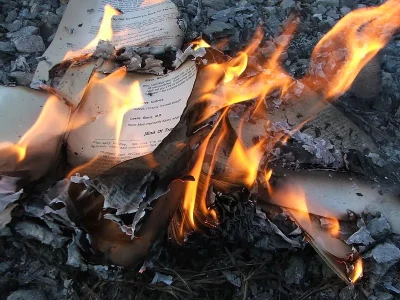
In the realm of scientific curiosity and practical knowledge, few questions hold as much fascination as the query: “At what temperature does paper burn?” This seemingly simple yet intriguing inquiry unveils a world of chemistry, physics, and combustion dynamics.
As flames dance and tongues of fire lick at the edges of a sheet of paper, the complex interplay between heat, oxygen, and the paper’s molecular structure becomes a captivating spectacle.
Delving into the intricacies of paper combustion not only satiates our innate desire for understanding but also unveils the mysteries that arise when seemingly ordinary materials undergo extraordinary transformations.
So, let’s embark on a journey to unravel the secrets behind the ignition and combustion of paper, uncovering the precise temperature threshold at which this everyday substance takes on a mesmerizing, fiery metamorphosis.
At what temperature does paper burn?

The ignition temperature of paper is between 424 and 480 degrees Fahrenheit (218 and 246 degrees Celsius). This means that paper will not ignite and start to burn unless it is exposed to a heat source that is at least this hot.
However, it is important to note that the ignition temperature of paper can vary depending on the type of paper, its thickness, and its moisture content. For example, wet paper will have a higher ignition temperature than dry paper.
In addition to the ignition temperature, the rate at which paper burns also depends on the heat source. A naked flame will cause paper to burn more quickly than a slow-moving heat source, such as a candle.
It is also important to note that the temperature of the paper can continue to rise even after it has ignited. The center of a burning paper can reach temperatures of up to 1500 degrees Fahrenheit (815 degrees Celsius). This is why it is important to take steps to extinguish a paper fire as quickly as possible.
Pinpoint paper’s combustion threshold
The combustion threshold of paper is the minimum temperature and oxygen concentration at which it will ignite and burn. The lower flammability limit (LFL) of paper is 16.5% oxygen by volume, and the upper flammability limit (UFL) is 23.5% oxygen by volume.
This means that if paper is in an atmosphere with 16.5% or more oxygen, it will ignite and burn if the temperature is high enough. If the oxygen concentration is below 16.5%, the paper will not ignite, even if the temperature is high. If the oxygen concentration is above 23.5%, the paper will ignite and burn, but the flame will be very weak and will not spread.
The combustion threshold of paper can also be affected by the thickness of the paper, the presence of impurities, and the surface area of the paper. Thicker paper will have a higher combustion threshold, as it will take longer for the heat to penetrate to the core of the paper.
Paper that contains impurities, such as ink or glue, will also have a higher combustion threshold. This is because the impurities will absorb heat and slow down the combustion process. Paper with a high surface area will have a lower combustion threshold, as the heat will be able to spread more easily across the surface of the paper.
In general, paper is a relatively flammable material. It is important to take precautions to prevent paper fires, such as keeping paper away from heat sources and not smoking near paper. It is also important to have fire extinguishers and smoke detectors on hand in case of a fire.
Temperature for paper’s chemical breakdown
The temperature for paper’s chemical breakdown depends on a number of factors, including the type of paper, the presence of impurities, and the humidity. In general, paper will start to break down chemically at temperatures above 100 degrees Celsius (212 degrees Fahrenheit).
However, the rate of breakdown will increase as the temperature increases. At temperatures above 200 degrees Celsius (392 degrees Fahrenheit), paper will start to decompose rapidly.
The presence of impurities can also affect the temperature at which paper breaks down chemically. For example, paper that contains ink or glue will break down at a lower temperature than pure paper. This is because the impurities will absorb heat and accelerate the breakdown process.
Humidity can also affect the temperature at which paper breaks down chemically. Paper that is exposed to high humidity will break down at a lower temperature than paper that is dry. This is because the moisture in the paper will help to break down the cellulose fibers.
In general, it is important to store paper in a cool, dry place to prevent it from breaking down chemically. If paper is exposed to high temperatures or humidity, it is important to take steps to cool it down or dry it out. This will help to prevent the paper from breaking down and becoming brittle.
Conditions turning paper into ash
Paper turns into ash when it is burned in the presence of oxygen. The heat from the fire causes a chemical reaction between the carbon and hydrogen in the paper and the oxygen in the air. This reaction produces carbon dioxide, water vapor, and a small amount of ash. The carbon dioxide and water vapor rise into the air as smoke, while the ash is left behind.
The following are the conditions necessary for paper to turn into ash:
- Heat: The paper must be heated to a high enough temperature for the chemical reaction to occur. The minimum temperature for paper to burn is about 450 degrees Fahrenheit.
- Oxygen: The paper must be in the presence of oxygen for the chemical reaction to occur. If there is not enough oxygen, the paper will not burn completely and will instead smolder.
- Absence of water: Paper will not burn if it is wet. The water will absorb the heat from the fire and prevent the chemical reaction from occurring.
If these conditions are met, paper will turn into ash in a matter of seconds. The amount of ash produced will depend on the type of paper and the amount of heat applied.
Paper’s pyrolysis trigger temperature
The pyrolysis trigger temperature of paper is typically around 200-300 degrees Celsius (392-572 degrees Fahrenheit). This is the temperature at which the paper fibers begin to break down and release volatile organic compounds (VOCs). If the temperature is raised further, the VOCs will combust and the paper will ignite.
The pyrolysis trigger temperature of paper can vary depending on the type of paper, the moisture content, and the presence of other materials. For example, paper with a high moisture content will have a higher pyrolysis trigger temperature. Additionally, paper that contains flammable materials, such as inks or dyes, will have a lower pyrolysis trigger temperature.
It is important to note that the pyrolysis trigger temperature of paper is not a fixed point. The paper will continue to decompose and release VOCs even after it has reached the pyrolysis trigger temperature. This means that paper can ignite even if it is not heated to a high temperature.
If you are working with paper in a high-temperature environment, it is important to take precautions to prevent fires. This includes using fire-resistant paper, keeping the paper dry, and avoiding contact with flammable materials.
Volatile point for paper’s components
The volatile point for paper’s components varies depending on the specific component. However, some of the most volatile components of paper include:
- Lignin: The main component of wood, lignin has a volatile point of around 170-180 degrees Celsius (338-356 degrees Fahrenheit).
- Hemicellulose: Another major component of wood, hemicellulose has a volatile point of around 150-160 degrees Celsius (302-320 degrees Fahrenheit).
- Cellulose: The structural component of paper, cellulose has a volatile point of around 320-340 degrees Celsius (608-670 degrees Fahrenheit).
- Inks: The inks used to print on paper can also be volatile, with volatile points ranging from 50-200 degrees Celsius (122-392 degrees Fahrenheit).
The volatile point of a component is the temperature at which it begins to evaporate. As the temperature of paper increases, the volatile components will begin to evaporate and release into the air.
Visible flames at paper’s shift temp
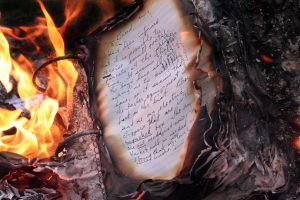
Visible flames will not be produced at paper’s shift temperature. The shift temperature of paper is the temperature at which the paper fibers begin to break down and release volatile organic compounds (VOCs). However, these VOCs are not flammable at this temperature. They will only combust and produce visible flames if the temperature is raised further.
The shift temperature of paper is typically around 200-300 degrees Celsius (392-572 degrees Fahrenheit). This is the temperature at which the paper fibers begin to lose their structural integrity and start to break down. The VOCs released at this temperature are mainly water vapor, carbon monoxide, and carbon dioxide. These gases are not flammable and will not produce visible flames.
It is only when the temperature of the paper is raised further, to around 400 degrees Celsius (752 degrees Fahrenheit), that the VOCs will become flammable and produce visible flames. This is the temperature at which paper will ignite and start to burn.
Therefore, it is not possible to see visible flames at paper’s shift temperature. The paper will only start to burn if the temperature is raised further.
Exothermic burn at paper’s temp
An exothermic burn is a type of combustion reaction that releases heat. The temperature of paper is typically around 200 degrees Fahrenheit, which is not hot enough to spontaneously combust. However, if paper is exposed to a heat source that is above its ignition temperature, such as a match or lighter, it will start to burn. The heat from the fire will then cause the paper to continue burning, releasing more heat and creating a self-sustaining reaction.
The temperature at which paper will ignite depends on a number of factors, including the type of paper, the humidity, and the presence of any other flammable materials. In general, however, paper will ignite at around 450 degrees Fahrenheit.
So, to answer your question, there is no exothermic burn at paper’s temperature. Paper will not spontaneously combust at room temperature. However, if it is exposed to a heat source that is above its ignition temperature, it will start to burn and release heat, creating a self-sustaining reaction.
Conclusion
The question At what temperature does paper burn? leads us into a realm of scientific exploration and practical implications. Through understanding the delicate balance between heat, oxygen, and the molecular composition of paper, we gain insights into the fundamental principles of combustion.
As we unravel the mysteries behind this seemingly ordinary process, we not only enhance our knowledge of the world around us but also come to appreciate the intricate beauty that lies within even the simplest of transformations.