
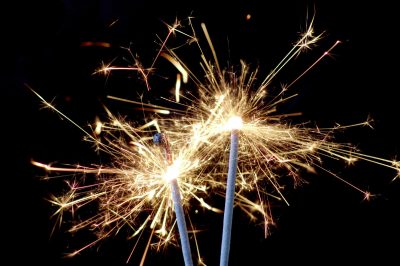
How hot does a sparkler burn? is a question that has intrigued both curious minds and passionate celebrants for generations. These dazzling pyrotechnic wonders, often associated with joyous occasions and festivities, have a unique allure that captivates young and old alike.
As we witness the mesmerizing sparks dancing and shimmering in the night sky, it’s only natural to wonder about the intense heat generated by these seemingly harmless handheld fireworks.
Delving into the chemistry behind sparklers’ scintillating display, this article aims to uncover the captivating secrets of their burning temperatures and the science that transforms them into the spectacular illuminations we know and love. Join us on this journey to explore the sizzling world of sparklers and understand just how hot they can burn.
How hot does a sparkler burn?
Sparklers burn at a temperature of about 1,200 degrees Fahrenheit (648 degrees Celsius). This is hot enough to melt metal, but not hot enough to cause serious burns. However, it is still important to be careful when handling sparklers, as they can cause minor burns if they come into contact with skin.
The heat from a sparkler is created by the combustion of the metal salts that are used to make them. These salts react with oxygen in the air to produce a bright flame. The heat from the flame then causes the metal salts to vaporize, which creates the sparks that we see.
Sparklers are a popular item for use at celebrations such as birthdays, weddings, and holidays. They are also often used in parades and other public events. However, it is important to use sparklers safely. Here are some safety tips for using sparklers:
- Always have an adult supervise when using sparklers.
- Never point a sparkler at someone’s face.
- Keep sparklers away from flammable materials.
- Do not throw sparklers.
- Extinguish sparklers completely before disposing of them.
By following these safety tips, you can help to ensure that your sparkler experience is safe and enjoyable.
Does sparkler length affect its burning temperature?
Yes, the length of a sparkler does affect its burning temperature. However, the effect is not as significant as you might think. After about 15 inches, the wire core of a sparkler will have reached maximum temperature. Everything after 15 inches should have around the same temperature.
This is because the combustion reaction that produces the sparks in a sparkler is a self-limiting reaction. This means that the reaction will eventually reach a point where it cannot continue any further. The length of the sparkler only affects the amount of time it takes for the reaction to reach this point.
So, while a longer sparkler will burn for a longer time, it will not necessarily burn at a higher temperature. The actual temperature of a sparkler is more affected by the type of metal salts that are used to make it.
Here are some additional factors that can affect the burning temperature of a sparkler:
- The thickness of the wire core.
- The type of metal salts that are used.
- The humidity of the air.
- The wind speed.
It is important to note that sparklers can still cause burns, even if they are not burning at their maximum temperature. So, it is always important to use sparklers safely and to supervise children who are using them.
Safety precautions for sparkler use?
Sparklers can be a fun and festive way to celebrate special occasions like Fourth of July, New Year’s Eve, or other festivities. However, they can also pose certain risks, especially if not handled properly. To ensure safe sparkler use, consider the following safety precautions:
- Supervision: Always ensure that adults supervise the use of sparklers, especially when children are involved. Sparklers burn at high temperatures and can cause injuries if not handled responsibly.
- Open Space: Use sparklers in a clear, open outdoor area away from flammable materials, buildings, and dry vegetation. Avoid using them indoors or in crowded spaces.
- Protective Clothing: Wear appropriate clothing, including closed-toe shoes and long-sleeved shirts, to protect your skin from sparks and potential burns.
- Lighting and Handling: Light sparklers one at a time and use a handheld, extended lighter or a punk to ignite them. Never use matches or lighters that have short stems. Hold the sparkler at arm’s length and away from the body.
- Distance: Maintain a safe distance between yourself and others when using sparklers. Ensure that there is enough space between each person to prevent accidental contact.
- Bucket of Water: Have a bucket of water or a container of sand nearby to extinguish used sparklers. Once a sparkler has burned out, place it in the water or sand to ensure it is completely extinguished.
- No Hand Passing: Never pass lit sparklers from one person to another. This increases the risk of accidental burns or collisions.
- No Pointing: Avoid pointing or waving sparklers at others or yourself. Always keep the sparkler pointed away from your body and face.
- No Relighting: Do not attempt to relight a sparkler that has gone out. Discard used sparklers safely in a bucket of water.
- Disposal: Dispose of used sparklers properly. Place them in a metal container once they have cooled down, and store them away from flammable materials until you can properly dispose of them.
- No Alcohol: Avoid using sparklers or any fireworks if you have consumed alcohol or are under the influence of drugs.
- Pets: Keep pets indoors during sparkler use, as the noise and lights can frighten them.
Remember, safety should always be a top priority when using any type of fireworks or pyrotechnics. By following these safety precautions, you can enjoy sparklers responsibly and reduce the risk of accidents or injuries.
Can sparkler burning temperature cause injuries?
Yes, the burning temperature of sparklers can cause injuries. Sparklers burn at a temperature of about 1,200 degrees Fahrenheit (648 degrees Celsius), which is hot enough to cause minor burns if they come into contact with skin. In addition, the sparks from sparklers can also cause eye injuries.
Here are some of the most common injuries caused by sparklers:
- Minor burns: These are the most common type of injury caused by sparklers. They can occur if a sparkler comes into contact with skin, or if the sparks from a sparkler hit the skin. Minor burns usually heal on their own within a few days, but they can be painful.
- Eye injuries: Sparkler sparks can also cause eye injuries, such as corneal abrasions and conjunctivitis. These injuries can be serious and can lead to permanent vision loss.
- Fires: Sparklers can also start fires if they are not used properly. This is why it is important to supervise children who are using sparklers, and to keep them away from flammable materials.
If you or someone you know is injured by a sparkler, it is important to seek medical attention immediately. Minor burns can usually be treated at home with cool compresses and antibiotic ointment. However, eye injuries and fires should always be treated by a doctor.
How does sparkler temperature compare to other fireworks?
The temperature of sparklers can vary depending on the specific type and composition of the sparkler. However, in general, sparklers burn at temperatures ranging from 1,200 to 2,000 degrees Fahrenheit (650 to 1,090 degrees Celsius). These temperatures can cause serious burns if not handled properly.
Comparatively, other types of fireworks can burn at much higher temperatures. For example:
- Firecrackers: Firecrackers typically burn at temperatures similar to sparklers or slightly higher, ranging from 1,300 to 1,800 degrees Fahrenheit (700 to 980 degrees Celsius).
- Fountains: Fountains are fireworks that emit sparks and various effects but remain stationary. They can burn at temperatures ranging from 1,300 to 1,600 degrees Fahrenheit (700 to 870 degrees Celsius).
- Roman Candles: Roman candles are long tubes that shoot out colored balls or stars. They can burn at temperatures between 1,500 and 1,800 degrees Fahrenheit (820 to 980 degrees Celsius).
- Bottle Rockets: Bottle rockets can burn at temperatures similar to sparklers, ranging from 1,200 to 2,000 degrees Fahrenheit (650 to 1,090 degrees Celsius).
- Aerial Shells: Aerial shells are launched into the air and explode to create dazzling displays. The internal temperatures during the explosion can reach several thousand degrees Fahrenheit (over 1,000 degrees Celsius).
It’s important to note that these temperatures are approximate and can vary depending on the specific manufacturer, composition, and size of the fireworks. Regardless of the type of firework, they all carry potential risks if not used safely and responsibly. Always follow safety guidelines and exercise caution when handling any fireworks to prevent injuries and accidents.
Age restrictions for handling sparklers?
The age restrictions for handling sparklers vary depending on the country or state. In the United States, the Consumer Product Safety Commission (CPSC) recommends that children under the age of 7 should not handle sparklers. This is because children under the age of 7 may not be able to understand the safety precautions necessary for using sparklers, and they may be more likely to get burned or injured.
However, some states have stricter age restrictions. For example, in California, it is illegal for anyone under the age of 12 to handle sparklers. And in New York City, it is illegal for anyone under the age of 16 to handle sparklers.
It is important to check the laws in your area before allowing children to handle sparklers. And even if the age restriction is 7 or older, it is still important to supervise children closely when they are using sparklers.
Here are some safety tips for using sparklers with children:
- Start with a small number of sparklers and gradually increase the number as your child gets older and more experienced.
- Always supervise children when they are using sparklers.
- Never let children handle sparklers unsupervised.
- Teach children how to use sparklers safely.
- Make sure children know not to point sparklers at people or animals.
- Keep sparklers away from flammable materials.
- Extinguish sparklers completely before disposing of them.
By following these safety tips, you can help to ensure that your child’s sparkler experience is safe and enjoyable.
Can sparklers ignite flammable materials?
Yes, sparklers can ignite flammable materials. Sparklers burn at a temperature of about 1,200 degrees Fahrenheit (648 degrees Celsius), which is hot enough to ignite many types of materials. This is why it is important to keep sparklers away from flammable materials, such as gasoline, hair spray, or alcohol.
In addition, the sparks from sparklers can also ignite flammable materials. This is why it is important to use sparklers in a clear, open area away from flammable materials. If you are using sparklers near a fire pit or grill, it is important to keep the sparklers at least 10 feet away from the fire.
Impact of sparkler composition on burning temperature?

The burning temperature of sparklers is influenced by their composition, specifically the types of chemicals and metals used in their construction. The different components in the sparkler composition determine the color and intensity of the sparks produced as well as the burning temperature.
The common components found in sparklers include:
- Fuel: Usually, the fuel in sparklers is a metal powder, such as aluminum, which provides the bright, glowing sparks when it burns. Different types of metals can produce varying colors of sparks.
- Oxidizer: An oxidizer, typically potassium nitrate (saltpeter), provides the oxygen needed for the burning process. The oxidizer supports the combustion of the fuel, resulting in the release of energy in the form of heat and light.
- Binder: A binder is used to hold the sparkler composition together. It’s often made of a material that burns at a lower temperature than the fuel and oxidizer, helping to maintain the burning process.
- Colorants (Optional): Some sparklers may include colorants to produce different colored sparks. These colorants are usually various metal salts that emit specific colors when heated.
Regulations on sparkler burning temperature?
There were no specific regulations on the burning temperature of sparklers in most countries or regions. However, it’s important to note that regulations regarding the sale, possession, and use of fireworks, including sparklers, can vary widely depending on the jurisdiction.
Many countries and local governments have established laws and guidelines to regulate the use of fireworks due to safety concerns. These regulations typically focus on factors such as age restrictions for purchasing fireworks, permissible dates and times for their use, and restrictions on certain types of fireworks.
Even though there might not be specific regulations on the burning temperature of sparklers, the general safety regulations for fireworks use apply to sparklers as well. These regulations often include:
- Age Restrictions: There may be age limits for purchasing and handling sparklers and other fireworks. Typically, only adults are allowed to buy and use them.
- Permissible Use: There might be specific dates and times when fireworks, including sparklers, are allowed to be used, such as during holidays or special events.
- Safe Handling: Regulations might require users to follow safety guidelines while handling sparklers, including using them in open spaces away from buildings and flammable materials, wearing appropriate clothing, and maintaining a safe distance from others.
- Selling and Storage: Regulations may also cover how fireworks, including sparklers, are sold, stored, and transported.
It’s essential to check the local laws and regulations in your area regarding fireworks and sparkler use. Additionally, it’s crucial to exercise caution, follow safety precautions, and use sparklers responsibly to avoid accidents and injuries.
Keep in mind that regulations may change over time, and new laws or guidelines might have been implemented since my last update. Therefore, I recommend checking with local authorities or official government websites for the most up-to-date information on regulations related to fireworks and sparkler use in your area.
How long do sparklers burn at maximum temperature?
The duration for which sparklers burn at their maximum temperature can vary depending on the type and size of the sparkler.
Generally, sparklers burn for a short period, typically between 20 seconds to 2 minutes. During this time, they reach their maximum temperature, which can range from 1,200 to 2,000 degrees Fahrenheit (650 to 1,090 degrees Celsius) or even higher in some cases.
The burning time of sparklers is influenced by factors such as the composition of the sparkler, the thickness of the sparkler wire, and the environmental conditions (e.g., wind). Longer sparklers may burn for a longer duration but can also reach higher temperatures. On the other hand, shorter sparklers may burn for a shorter time and have lower maximum temperatures.
It’s crucial to handle sparklers with care and follow safety precautions during their entire burning duration. Always use sparklers in open, outdoor areas away from flammable materials, keep a safe distance from others, and have a bucket of water or sand nearby to extinguish them once they have burned out.
Also, remember that even after a sparkler has burned out, its metal wire may still be hot, so avoid touching it until it has cooled down completely.
Does humidity affect sparkler burning temperature?
Yes, humidity can have an impact on the burning temperature and overall performance of sparklers. Humidity refers to the moisture content in the air, and it can affect how easily sparklers ignite and sustain their burn.
- Ignition: High humidity can make it more challenging to ignite sparklers. Sparklers typically contain an oxidizer (such as potassium nitrate) that provides the necessary oxygen for the burning process. In humid conditions, the oxidizer can absorb moisture from the air, reducing its effectiveness in supporting combustion. This might result in a delayed or more difficult ignition of the sparkler.
- Burning Rate: Humidity can also affect the burning rate of sparklers. Moisture can act as a barrier, slowing down the reaction between the fuel and the oxidizer. As a result, sparklers may burn more slowly in humid conditions, potentially affecting the brightness and duration of the sparkler’s performance.
- Sparks: High humidity can reduce the intensity and number of sparks produced by sparklers. The presence of moisture can interfere with the chemical reactions that generate the sparks, leading to less vibrant displays.
To get the best performance from sparklers, it’s generally recommended to use them in dry conditions. Dry weather with low humidity is ideal for sparkler use, as it ensures proper ignition and more consistent burning. If the air is humid, you might experience some challenges with ignition and overall sparkler performance.
As always, safety is paramount when using sparklers or any fireworks. Regardless of the humidity, make sure to follow all safety guidelines and precautions to prevent accidents and injuries. Use sparklers in open, outdoor areas away from flammable materials, keep a safe distance from others, and have a bucket of water or sand nearby for safe disposal once they have burned out.
Is the tip of a sparkler the hottest part?
Yes, the tip of a sparkler is typically the hottest part during its burning process. The heat is generated through a combustion reaction between the fuel (usually a metal powder) and the oxidizer (often potassium nitrate) in the sparkler’s composition.
As the sparkler is ignited, the tip quickly reaches its maximum temperature, which can be as high as 1,200 to 2,000 degrees Fahrenheit (650 to 1,090 degrees Celsius). At this temperature, the metal particles in the sparkler’s composition burn brightly, producing the characteristic sparks and flames.
The heat gradually dissipates from the tip towards the base of the sparkler as it burns down. The intensity of the heat reduces as you move away from the tip, so the middle and base of the sparkler are cooler than the tip during the burning process.
It’s essential to handle sparklers carefully during their entire burning duration, not just at the tip. Always hold sparklers at arm’s length and away from your body and face. Also, keep a safe distance from others and avoid pointing sparklers at people or flammable materials.
After the sparkler has burned out, the metal wire may still be hot, so be cautious and let it cool down completely before touching it or disposing of it safely in a bucket of water or sand.
Recommended:
- kitchen fire safety
- Led fireplace insert
- What temperature does rock melt?
- Lighter fire
- How to safely burn paper
Conclusion
Find out on this page how hot does a sparkler burn. Sparklers burn at high temperatures, typically ranging from 1,200 to 2,000 degrees Fahrenheit (650 to 1,090 degrees Celsius). The tip of the sparkler is the hottest part, reaching its maximum temperature quickly during the burning process.
These temperatures can cause serious burns if not handled with care. Always follow safety precautions, use sparklers in open, outdoor areas, keep a safe distance from others, and have a bucket of water or sand nearby for safe disposal.